
As energy costs continue to rise and sustainability becomes a priority for developers, multi-family developments are increasingly turning to solar energy as a long-term solution. Whether building a new apartment complex, condominium community, mixed-use property, or townhome development, solar power can reduce operating costs, increase property value, and create a competitive advantage in the housing market.
For developers, property owners, and investors, solar is no longer just an environmental initiative. It is a strategic financial decision.
Key Points:
- Solar helps reduce operating expenses for multi-family developments.
- Residents increasingly value sustainable and energy-efficient housing.
- Solar can improve property value and marketability.
- New financing options and tax incentives can reduce upfront costs.
- Systems can be designed to offset common area energy use or provide benefits to individual tenants.
- Battery storage can increase energy resilience and reliability.
- Solar supports long-term sustainability goals and ESG initiatives.
Why Solar Makes Sense for Multi-Family Developments
Multi-family properties often have significant energy demands. Common areas such as hallways, elevators, leasing offices, fitness centers, parking garages, and outdoor lighting consume electricity around the clock. Solar installations can help offset these expenses and lower utility costs for property owners. Studies and industry data show that multifamily solar projects can reduce operating expenses while improving net operating income (NOI).
Unlike single-family homes, multi-family developments also benefit from economies of scale. A single solar system can generate power for multiple units or common areas, making the investment more efficient and cost-effective.

Increasing Property Value and Market Appeal
Today’s renters and homebuyers are paying more attention to sustainability. Energy-efficient communities are often viewed as more desirable because they can help lower utility costs and reduce environmental impact.
Developers who incorporate solar into new construction projects can position their properties as forward-thinking and environmentally responsible. Solar installations can also support green building certifications and sustainability initiatives that appeal to investors and environmentally conscious residents. Multifamily housing providers frequently use solar as a differentiator in competitive markets.
As ESG (Environmental, Social, and Governance) reporting becomes increasingly important, solar energy can help property owners demonstrate a commitment to sustainability while potentially attracting institutional investors.
Solar Options for Multi-Family Communities
Every development is unique, which means solar systems can be designed to meet different goals.
Common Area Offset
One of the most popular approaches is using solar to power common-area electrical loads. This includes lighting, elevators, clubhouses, pools, maintenance facilities, and other shared amenities. This model is often the simplest to implement and can immediately reduce operating expenses.
Tenant Energy Benefits
In some markets, utility programs and billing structures allow solar energy credits to be distributed among tenants. Virtual net metering and similar programs can help residents share in the savings generated by a solar installation.
Community Solar Participation
If rooftop space is limited, some developments may benefit from community solar programs that provide access to renewable energy generated off-site. This allows both property owners and residents to participate in solar savings without installing panels directly on the building.
Financial Incentives Improve ROI
One reason solar adoption is accelerating is the availability of incentives and financing solutions. Tax incentives, accelerated depreciation opportunities, and state or local programs can significantly reduce the overall cost of installation. These incentives can improve project economics and shorten payback periods for developers and property owners.
Additionally, many commercial solar projects can be structured through loans, leases, power purchase agreements (PPAs), or other financing options that minimize upfront capital requirements.
Planning for Long-Term Success
Successful multi-family solar projects begin during the design phase. Early planning allows developers to optimize roof space, electrical infrastructure, and future energy needs. It can also simplify permitting and construction timelines.
Battery storage is becoming an increasingly attractive addition to multi-family developments. Pairing solar with energy storage can improve energy resilience, provide backup power during outages, and help properties better manage peak energy demand.
Working with an experienced commercial solar contractor ensures that the system is properly designed, installed, and optimized for long-term performance.
Build Smarter with Solar
Solar energy offers a powerful opportunity for multi-family developers to reduce operating costs, improve sustainability, and increase property value. As energy prices continue to fluctuate and demand for green housing grows, integrating solar into new developments can provide benefits for both property owners and residents.
Whether your goal is lower utility expenses, enhanced marketability, or long-term investment performance, solar can be an important part of a smarter, more sustainable development strategy.
Contact Tiger Solar to learn more about your options.
Frequently Asked Questions
Can solar panels power an entire apartment complex?
Solar can offset a significant portion of an apartment complex’s energy consumption, but most properties remain connected to the utility grid for supplemental power when needed.
How do tenants benefit from solar in a multi-family development?
Tenants may benefit through lower utility costs, shared solar credits, community solar programs, or improved building amenities supported by reduced operating expenses.
Are solar panels a good investment for apartment buildings?
In many cases, yes. Solar can reduce operating costs, increase ROI, improve property value, and help attract environmentally conscious residents.
What incentives are available for multi-family solar projects?
Available incentives vary by location but may include federal tax credits, accelerated depreciation, state incentives, utility rebates, and specialized financing programs.
Can solar be added to existing multi-family properties?
Yes. Both new construction and existing apartment communities can benefit from commercial solar installations, provided the property has suitable roof space, parking structures, or land available for solar development.
Piedmont Housing Alliance – Hickory Hope Apartments at Southwood Community
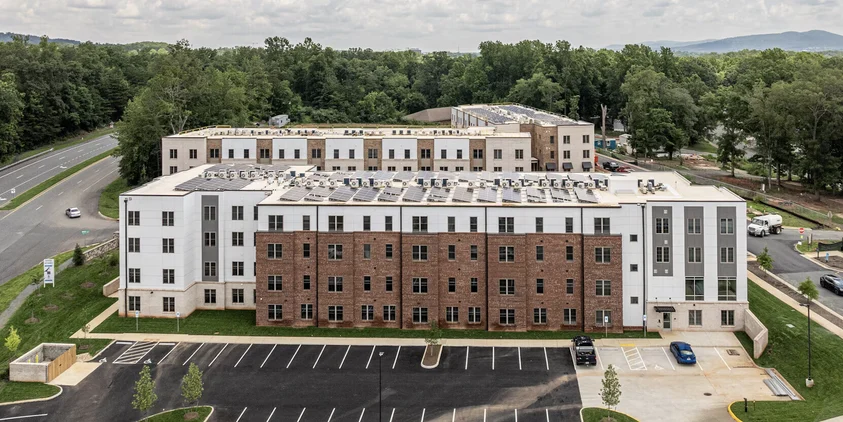
Piedmont Housing Alliance: Kindlewood Buildings 1-3
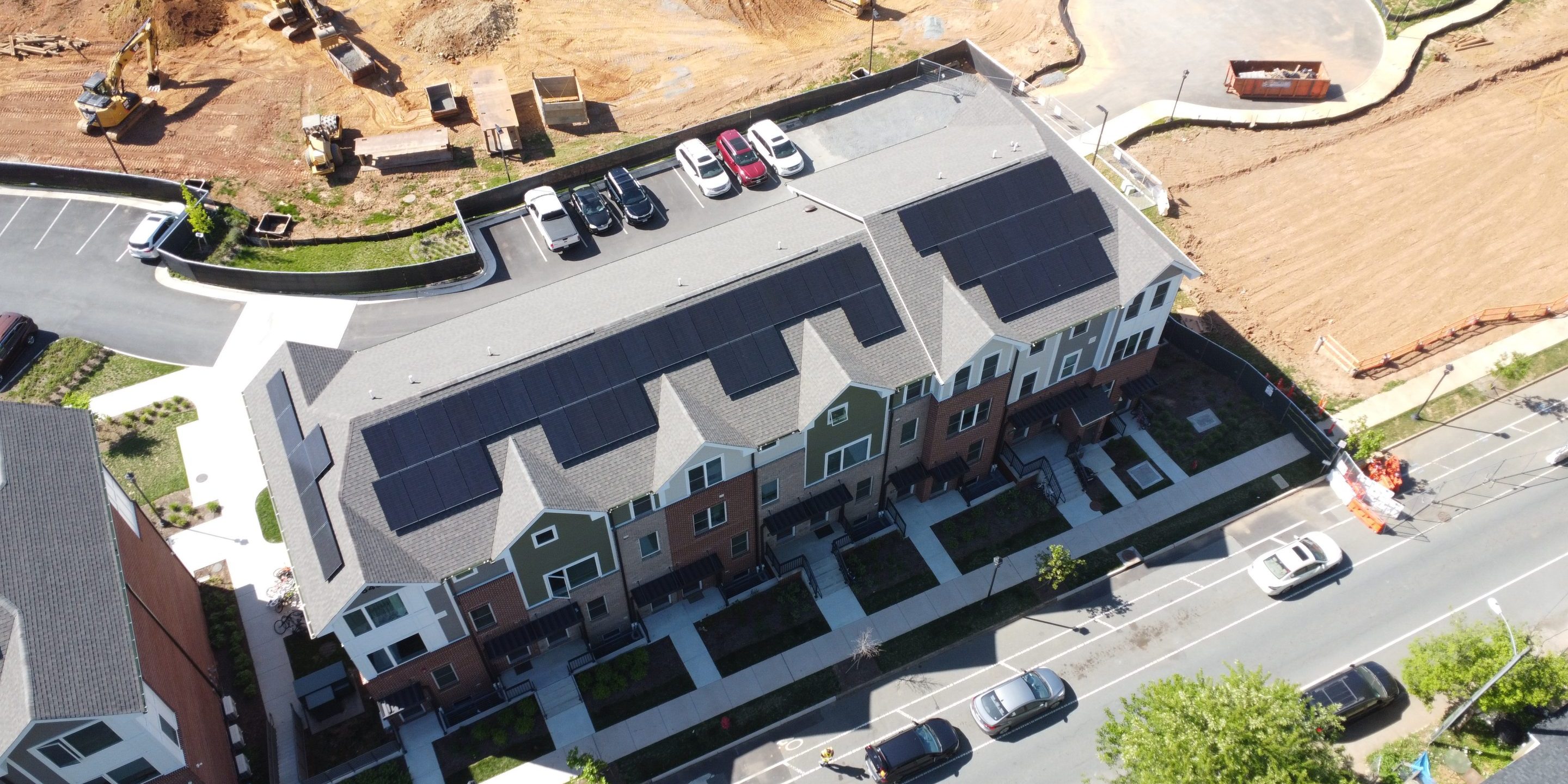
Support Works Housing – New Clay House II
