
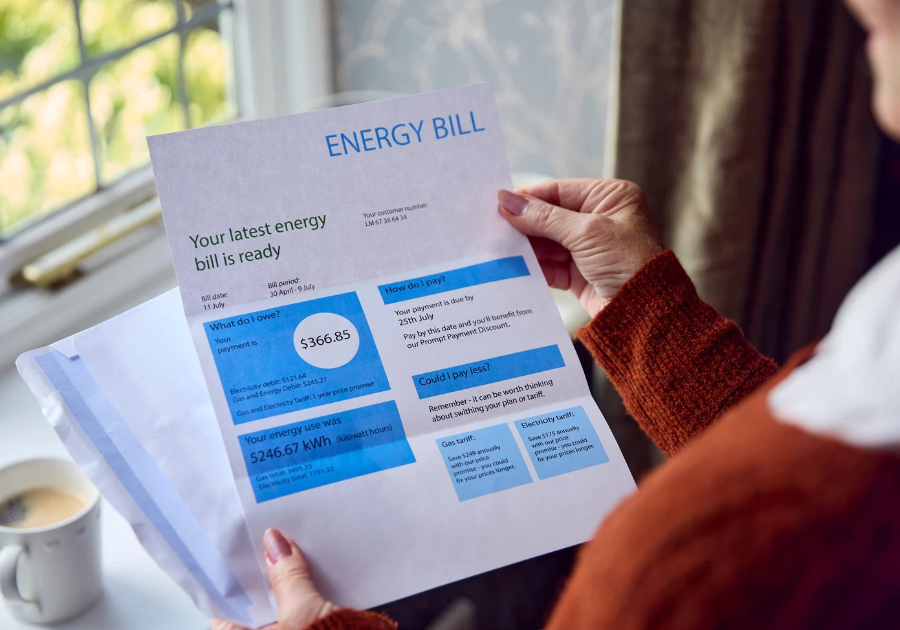
There can be many different reasons a customer selects to install a solar system with Tiger Solar. Before we jump into discussions about pricing, panels, batteries, or backup, we first ask our clients what’s driving them to consider an alternative energy solution. Now, more than ever, we’re hearing one concern in particular: the continued increase in power bills.
It’s simple for us to say that solar helps you hedge against future energy cost increases, but what does that actually look like? In short, going solar helps you lock in your power costs today, so rising electricity prices can't touch you tomorrow.
Here’s what that means in practice. Utility rates aren’t fixed – what you pay per kilowatt-hour today is simply a snapshot in time. Rates inevitably increase over the years (on average, 2-4% annually) due to factors like grid upgrades, fuel costs, or increased demand. Over 20 years, even a 3% annual increase compounds into power costing nearly double what it does today.
When you go solar, you sidestep that entire cycle. Think about what you're really doing: you're paying for a physical system (panels, inverters, wiring) that converts sunlight into electricity for your home. Once that system is paid off (whether you paid cash upfront or financed it), your "fuel" is free. Forever. The sun isn't subject to fuel cost increases, transmission fee hikes, or infrastructure surcharges the way a utility's power plant is.
So instead of your monthly bill being a variable number that utilities adjust based on their costs, your cost becomes fixed: either $0 (if you paid cash and own your system outright) or a predictable, unchanging loan payment (if you financed it). Either way, you know exactly what your power costs will be next year, and the year after that, and a decade from now because you're not relying on someone else's pricing decisions anymore.
It's the difference between being a price-taker and a price-maker. As a utility customer, you take whatever price they set. As a solar owner, you've essentially made your own price and locked it in the day your system was switched on. That can still feel a little abstract, though. Let’s look at a few familiar, everyday comparisons that help show what that can actually look like.
Picture Your Power Bill Like a Gas Tank
Imagine you could fill up your car's gas tank once, at today's price, and never have to worry about gas prices again, even if they doubled or tripled in five years. That's essentially what solar does for your electricity.
Think about how gas prices work. You don't control them. They shift with global oil markets, refinery capacity, seasonal demand, even geopolitical events happening on the other side of the world. You just show up at the pump and pay whatever the sign says that day. Multiply that by twelve months a year, every year, for the rest of your life and that's roughly the relationship most people have with their electric bill.
Now imagine a version of that world where, one day, you could lock in a single price for gas at today's price and drive on that same price forever, no matter what happens at the pump for everyone else. That would feel like a superpower. You'd watch prices rise on the news and just shrug, because it wouldn't apply to you anymore.
That's not a hypothetical with solar. Right now, if you're on the grid, your utility company sets the price of power, and just like gas that price tends to creep upward year after year.
Solar is the equivalent of locking in that gas price for good. The "fuel" in this case is sunlight and it doesn't have a market price, doesn't get taxed at increasing rates, and doesn't respond to a utility's rising operating costs. Once your system is installed, you've essentially pre-purchased your power supply for the next two-plus decades, at a rate that will look increasingly like a bargain as everyone else's "price at the pump" keeps climbing.
Think of It Like a Mortgage vs. Renting
Paying a utility bill every month is like renting a home or an apartment. You're paying for power, but you'll be paying more for that same power next year, and the year after that, forever.
When you rent an apartment, you're paying for the right to live somewhere for one month at a time. There's no equity building up, no ownership stake, and no protection from your landlord raising the rent when your lease renews. You're at the mercy of the market and the market, historically, moves in one direction: up. Utility bills work the exact same way. You pay for the electricity you used this month, then next month you pay again potentially at a higher rate with no equity, no ownership, and no say in what happens next.
Going solar is like buying a home with a fixed-rate mortgage. Your payment (either your solar loan or the upfront cost you already paid) stays predictable. When you take out a fixed-rate mortgage, something powerful happens: your core housing payment gets locked in place, even while rents in your neighborhood keep climbing around you. Ten years from now, homeowners with fixed-rate mortgages are often paying dramatically less than renters for comparable space, not because their homes got cheaper, but because everyone else's costs kept rising while theirs didn't.
Solar creates that same dynamic with electricity. If you paid cash for your system, your "mortgage" is already paid off and you're living rent-free, energy-wise. If you financed it, your solar loan payment is fixed for the term, just like a mortgage payment, regardless of what happens to grid electricity prices during that time.
Meanwhile, your neighbor who's still "renting" power from the utility watches their rate creep up year after year. They didn't do anything wrong, they just stayed a renter in a market that only moves one way. Five, ten, fifteen years down the road, the gap between what they're paying per kilowatt-hour and what you locked in becomes stark. You'll be the one still paying "2026 prices" while the rest of the neighborhood is paying whatever 2036 or 2041 electricity costs.
That's the ownership advantage solar gives you: you stop being a price-taker in a market you don't control, and you start building equity in your own energy supply.
The "Freeze in Time" Moment
The moment your solar system goes live, you've essentially frozen your electricity cost at today's price. While your neighbors' bills climb with inflation and rising energy demand, your cost of power stays anchored to the day you switched.
There's an actual moment this happens. It's the day your utility company flips the switch on your net meter, or the day your system passes inspection and starts producing power. From that point forward, a clock effectively stops for you. Everyone else's electricity costs keep moving forward in time, tracking inflation, fuel costs, data center expansion, and grid maintenance expenses. Yours doesn't. You're frozen at the rate you locked in, while the world around you keeps adjusting.
It helps to think of it almost like a photograph. Imagine snapping a picture of the cost of electricity on the day your panels are installed. Let’s use this year as an example (2026). That price gets preserved. Ten years from now, in 2036, the "current price" of electricity might look completely different due to, for example, a data center moving into your state, more surcharges, maybe new fees tied to grid modernization or extreme weather resilience. But your photograph, your frozen snapshot, still shows 2026 pricing. You're still living inside that picture, cost-wise, while everyone else has moved into a more expensive one.
That's the real magic here. It's a hedge against an expense you'd otherwise have zero control over. Most financial advisors will tell you the same thing about hedging: you do it against costs that are (a) unavoidable and (b) likely to rise. Electricity checks both boxes. You can't opt out of needing power. You need it to run your home, charge your devices, keep the lights on. And, historically, its price has only moved in one direction over any meaningful stretch of time. Solar is one of the few tools an average homeowner can leverage to take a cost like that (one that's normally completely outside their control) and fix it in place.