
Powering the Next Generation
Lock in stable energy costs for decades and keep more resources in the classroom where they belong.
What can solar do for a school?
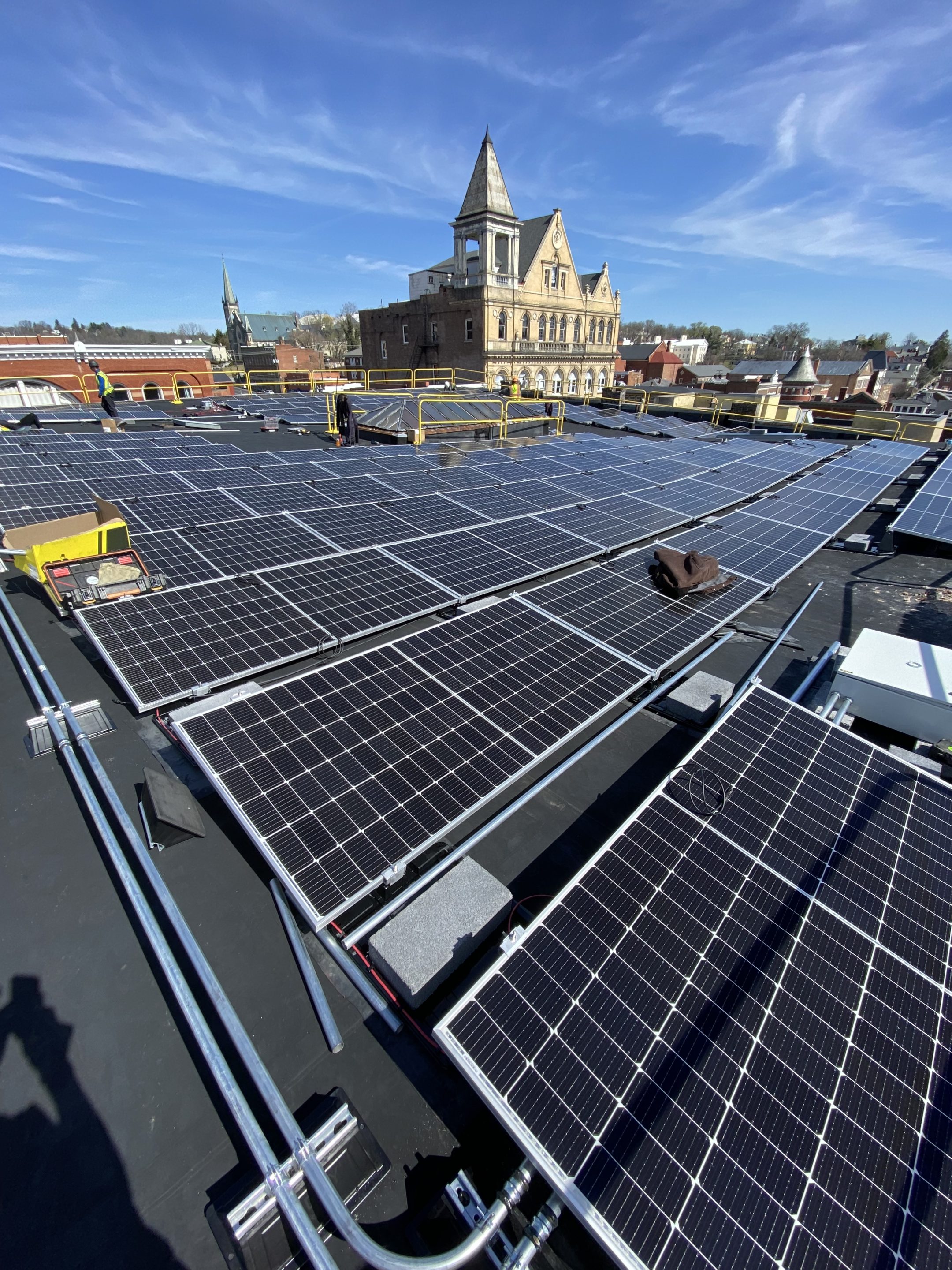
K-12 Schools, Universities and Trade Schools Invest in Solar For Many Reasons
- Lower operational costs so more funding supports classrooms and programs
- Reduce dependence on utilities and protect budgets
- Decades of reliable low-maintenance energy
- Power campuses during severe weather
- Demonstrate environmental stewardship
Get a Free Quote

 We’re trying to do as many roofs as possible. We’ve shortlisted about 15 to 16 roofs that we want to do in the next two to four years. Then for the last five, six years, every building that we’ve been building, we’ve been making it solar ready.”
– Sathish A.
Director of Power and Light, University of Virginia
2024 Tiger Solar Client
2024 Tiger Solar Client

Invest in the Future of Your School
Solar energy helps schools reduce operating costs, strengthen campus infrastructure, and demonstrate leadership in sustainability.

Peabody School
Charlottesville, VA

International School of Charlottesville
Charlottesville, VA

CATEC
Charlottesville, VA

Piedmont Virginia Community College
Charlottesville, VA

Virginia Tech
Blacksburg, VA

Charlottesville Day School
Charlottesville, VA

Free Union Country School
Free Union, VA

University of Virginia
Charlottesville, VA
Harrisonburg City Public Schools
Harrisonburg, VA

Village School
Location: Charlottesville, VA
Solar Systems for
Houses of Worship FAQ
Do schools qualify for the 30% federal solar tax credit?
Yes. Through the federal Direct Pay provision, schools and other tax-exempt entities can receive the equivalent of the 30% Investment Tax Credit (ITC) for solar projects. This incentive is currently available until Summer 2026, when the credit is scheduled to begin stepping down.
Are our school buildings good candidates for solar?
Most school facilities are strong candidates for solar. Important factors include the age and condition of the roof, structural capacity, roof materials, and available space. Our team can perform a site visit and energy analysis to determine which campuses are best suited for solar.
Do you offer financing options like leases or Power Purchase Agreements (PPAs)?
Yes. We offer flexible project structures, including direct ownership, Power Purchase Agreements (PPAs), and lease options, depending on location and school or district goals. These options allow schools to choose the approach that best fits their budget, incentive eligibility, and long-term facilities strategy.
Will installing solar disrupt school operations?
Solar projects are planned to minimize disruption. Most work takes place on rooftops, parking canopies, or unused campus areas, allowing construction to occur safely while school remains in session. Our team coordinates closely with school or district staff to maintain normal operations.
How much can schools typically save with solar?
Solar helps schools reduce and stabilize energy costs for decades. Savings depend on factors such as energy usage, available space for solar panels, and project structure, but many districts significantly reduce their long-term electricity costs — freeing up resources for teachers, programs, and student services.
Can solar help schools stay powered during emergencies?
Solar can be paired with battery storage or microgrid systems to support critical facilities during outages. This allows schools to maintain power for essential systems like communications, lighting, and refrigeration, helping campuses serve as community shelters during emergencies.
How long do solar systems last?
Solar systems are built for a minimum of 25–30+ years of reliable operation with minimal maintenance. Modern panels include long-term performance warranties and are designed to provide predictable energy generation for decades.
What if our district plans to replace or renovate a roof?
Solar planning often includes evaluating the remaining life of existing roofs. If roof replacement is planned, the project timeline can be coordinated so the new roof is installed first, ensuring the solar system performs for its full lifespan.
Can solar be used as an educational tool for students?
Yes. Many districts incorporate solar systems into STEM, environmental science, and career and technical education programs. Real-time energy production data can be used in classrooms to help students learn about renewable energy, engineering, and sustainability. Tiger Solar has also hosted tours and education sessions for students to learn more about the solar systems installed on their schools.
How long does a school solar project take?
Most projects move from evaluation to installation in 6–12 months, depending on district approvals, engineering requirements, and utility interconnection timelines. Our team helps guide districts through planning, permitting, construction, and commissioning.